 Call:
Call:  Mail:
Mail: 



The Importance of Continuous Learning and Upskilling in Today's Workforce
Career Development
The Importance of Continuous Learning and Upskilling in Today's Workforce
- By Admin
- October 08, 2025
In an era where artificial intelligence can write code, robots can perform surgery, and entire industries can be transformed overnight, standing still is no longer an option. The modern workforce faces an unprecedented reality: the skills that secured your job today may become obsolete tomorrow. Yet within this challenge lies an extraordinary opportunity—for those willing to embrace continuous learning, the future holds limitless potential.
The question is no longer whether professionals need to upskill, but rather how quickly they can adapt to remain relevant in an ever-evolving landscape.
The Accelerating Pace of Technological Disruption
The workforce is experiencing a seismic shift driven by technological advancement. By 2030, an estimated 170 million new jobs will be created while 92 million existing positions will be displaced, primarily due to technological advancements, sustainability transitions, and demographic changes[4]. This transformation isn't happening gradually—nearly half of all workers' core skills will need to change within the next few years, with employers expecting 39% of workers' existing skill sets to become outdated by 2030[4].
The impact is already visible across industries. Breakthroughs in artificial intelligence, blockchain, and sustainable technologies are constantly reshaping how businesses operate[3]. Automation and AI are transforming traditional roles, displacing some positions while simultaneously creating entirely new categories of work that didn't exist a decade ago[3]. This creates a critical imperative: professionals must continuously acquire new competencies to transition into roles that leverage uniquely human capabilities such as problem-solving, creativity, and ethical decision-making[3].
The skills gap has reached crisis proportions. Currently, 75% of employers report difficulty filling open positions, and projections suggest that 85 million jobs could remain unfilled by 2030 due to insufficient qualified candidates[1]. This shortage isn't due to a lack of workers—it's a mismatch between available talent and the skills modern businesses require.
Transformative Benefits for Career Growth and Organizational Success
Personal Career Advancement
Continuous learning delivers tangible benefits that directly impact individual career trajectories. Professionals who invest in their development position themselves first in line for promotions and leadership opportunities[3]. The data speaks volumes: 86% of employees would leave their current positions for roles offering continuous learning opportunities[1]. This statistic underscores a fundamental shift in how workers evaluate career prospects—growth potential has become as important as compensation.
Beyond promotions, ongoing education enhances job security and competitive positioning. Employees who actively upskill increase their value to employers while simultaneously opening doors to new career pathways[3]. The cultivation of a growth mindset through continuous learning empowers individuals to embrace challenges and opportunities with confidence, fostering both professional achievement and personal satisfaction[3].
Organizational Advantages
For businesses, the return on investment in employee development is substantial. Companies offering structured training programs experience a remarkable 218% increase in income per employee compared to organizations without such initiatives[1]. This dramatic improvement in productivity and profitability demonstrates that learning and development strategies aren't merely HR initiatives—they're fundamental business drivers.
Organizations prioritizing continuous learning benefit from improved performance, increased innovation, decreased turnover, and greater resilience during market disruptions[1]. Employee engagement receives a significant boost as well: 92% of employees report that well-designed training programs positively impact their engagement levels[2]. Perhaps most compelling, 94% of employees state they would remain with a company longer if it invested in their learning and development[2].
Companies like Amazon and Accenture have demonstrated that robust reskilling initiatives attract ambitious talent while reducing turnover by signaling to employees that their personal growth matters[1]. In a competitive talent market where 76% of employees say ongoing learning opportunities influence their decision to stay with an organization[2], learning and development programs have become critical retention tools.
Strategic Approaches to Effective Upskilling
Embrace AI-Driven Personalization
Modern learning technology has revolutionized how organizations deliver training. AI-powered platforms now provide hyper-personalized learning experiences tailored to individual needs, roles, and learning styles[1]. These intelligent systems can reduce training time by 40% while ensuring employees receive the most relevant and timely content for their specific responsibilities[1]. The efficiency gains allow companies to upskill their workforce faster and more effectively than ever before.
Leverage Microlearning
Traditional lengthy training sessions are giving way to microlearning—quick, focused lessons delivered exactly when employees need them[1]. This approach aligns with how modern professionals consume information and respects their time constraints. Organizations using microlearning report better knowledge retention and immediate application of learned concepts on the job[1]. By breaking complex topics into digestible segments, microlearning helps teams adapt faster to new challenges and integrate learning seamlessly into daily workflows.
Prioritize Future-Ready Skills
The World Economic Forum identifies the top skills for 2030 as resilience, flexibility and agility, analytical thinking, curiosity and lifelong learning, along with AI and technological literacy[4]. Organizations should design their upskilling initiatives around these competencies, recognizing that technical skills alone are insufficient.
Soft skills have become increasingly critical as the pace of change accelerates. Adaptability, resilience, and emotional intelligence now rank among the most valuable professional attributes[1]. Companies investing in emotional intelligence training experience higher employee retention and gain competitive advantages during disruptive periods[1]. These human-centered capabilities complement technical expertise and enable professionals to navigate uncertainty effectively.
Create Accessible Learning Pathways
Effective upskilling requires collaboration between governments, educational institutions, and private companies to ensure accessible education and vocational training initiatives[4]. Organizations should offer flexible learning options that allow employees to continue working while gaining new skills and certifications[3]. Online courses, hands-on projects, and real-world applications help learners immediately apply new knowledge in practical contexts.
Internal development programs also play a vital role. Cross-functional training opportunities, mentorship initiatives, and support for holistic well-being boost employee engagement while increasing internal hiring rates[4]. When employees see clear pathways for advancement within their organizations, motivation and commitment naturally increase.
Foster a Culture of Continuous Learning
Building a learning culture requires more than implementing training programs—it demands organizational commitment from leadership down. Companies must position learning as a strategic priority rather than an HR checkbox[1]. This means allocating appropriate budgets (training investments have increased by nearly 12% as organizations recognize the value)[1], celebrating learning achievements, and creating psychological safety for experimentation and growth.
Employees need time and encouragement to pursue development opportunities. Organizations that view learning as integral to daily work rather than an extra task create environments where innovation thrives. When curiosity and intellectual growth are valued, companies cultivate the adaptability necessary to navigate an uncertain future.
Charting Your Path Forward
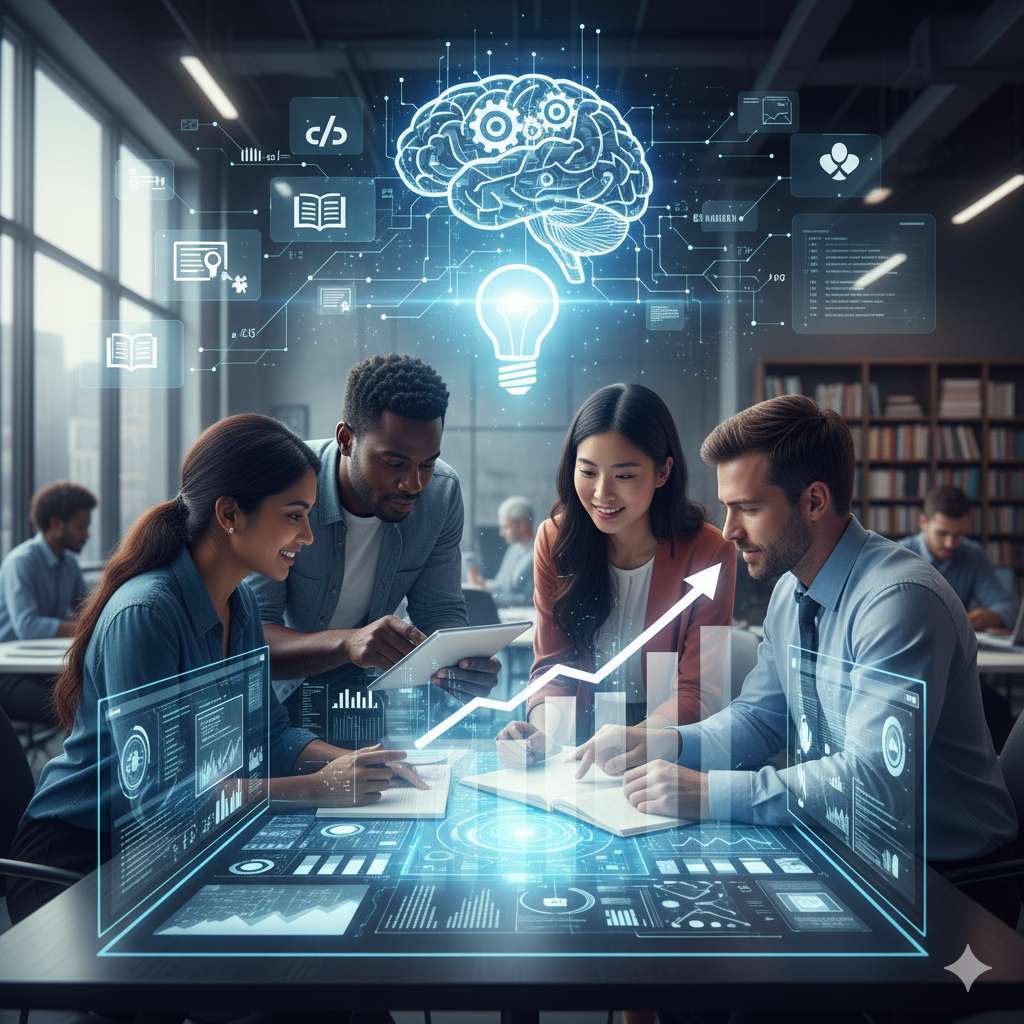
The evidence is unequivocal: continuous learning and upskilling are no longer optional in today's workforce—they are essential for survival and success. As technological advancement accelerates and industries transform, professionals who commit to lifelong learning will thrive while those who resist change risk obsolescence.
For individuals, the message is clear: invest in yourself now. Embrace emerging technologies, develop your soft skills, and cultivate a growth mindset that views challenges as opportunities. Your willingness to learn today directly determines your relevance tomorrow.
For organizations, the imperative is equally urgent: build robust learning ecosystems that empower employees to grow. The companies that prioritize continuous development won't just survive disruption—they'll lead their industries into the future.
The future belongs to those curious enough to keep learning, brave enough to embrace change, and committed enough to never stop growing. The question isn't whether you can afford to invest in continuous learning—it's whether you can afford not to.